What Body Scans Can Teach You: Visceral Fat, Muscle Mass and Smarter Progress Tracking
A body scan separates your weight into muscle mass, body fat and visceral fat, which a scale cannot do. Visceral fat sits around the organs and is more metabolically active than fat under the skin, and higher levels are associated with greater cardiometabolic risk. Skeletal muscle is where most glucose is stored and disposed of, so more lean mass supports function and long-term resilience. Scans are for tracking trends over time, not for diagnosing anything, and should be repeated under the same conditions because hydration, food and recent exercise all shift the readings.
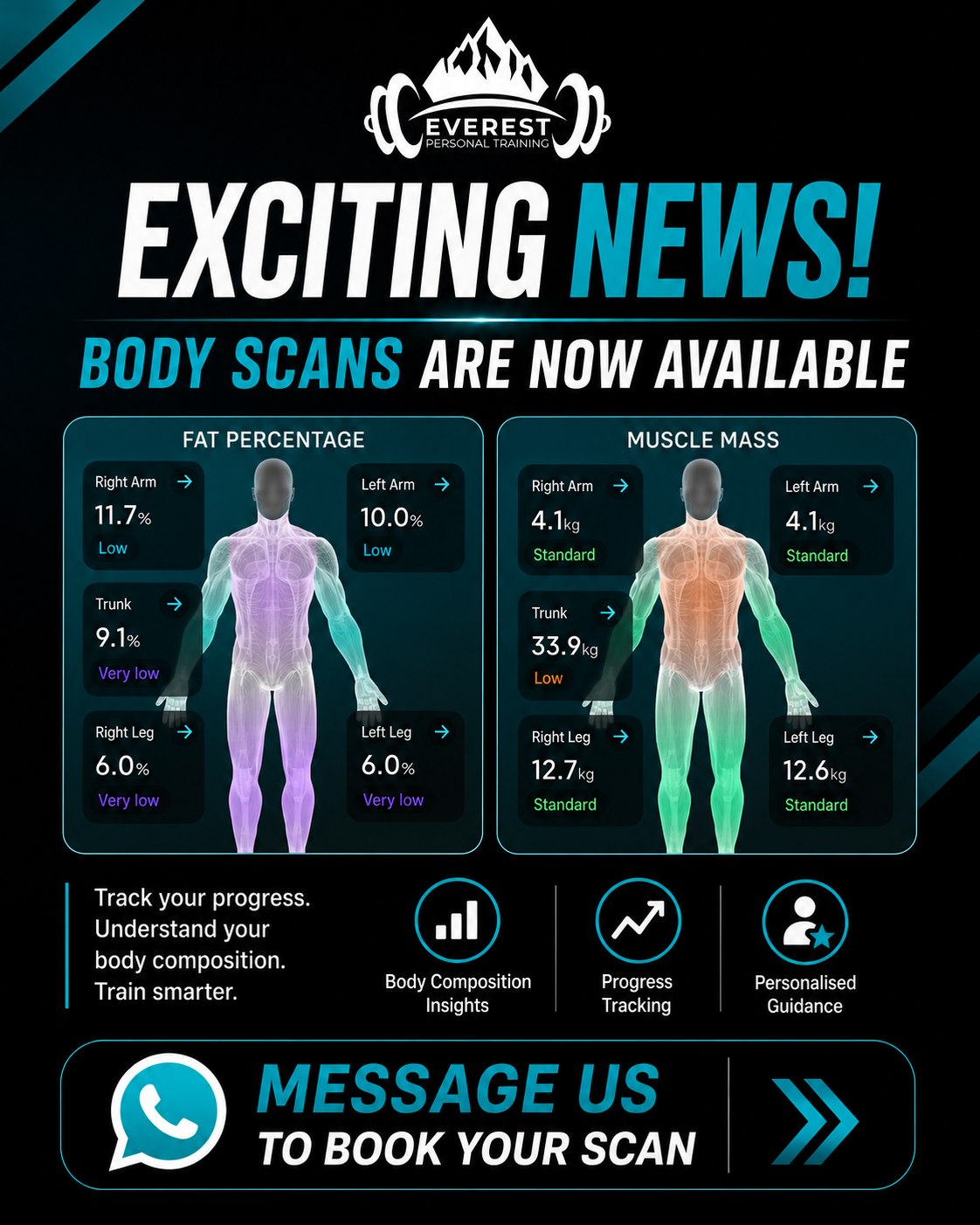
Two people can stand on the same scale, see the same number, and be in genuinely different health. One carries more muscle and less fat around their organs. The other is the reverse. The scale reports them as identical, which is the clearest demonstration of how little it actually tells you.
What a scan measures that a scale cannot
A body composition scan breaks your weight into its parts. Instead of one number, you get muscle mass, body fat percentage, and an estimate of visceral fat, along with a distribution across your body.
That distinction is the whole point. Weight is an aggregate. Progress usually happens inside the aggregate before it shows on the outside of it, which is why so many people conclude nothing is working during exactly the block where it is.
Visceral fat, and why it gets its own number
Not all body fat behaves the same way. Subcutaneous fat sits under the skin. Visceral fat sits deeper, packed around the organs in your abdominal cavity, and it is considerably more metabolically active.
Higher visceral fat is associated with increased cardiometabolic risk, greater inflammation and impaired insulin sensitivity. It is also one of the measures that responds well to consistent training and better nutrition, which makes it a genuinely motivating thing to track.
To be clear about scope: a body scan is a tracking tool, not a diagnostic one. It does not diagnose a medical condition and we do not use it as though it does. If a reading raises a question, that is a conversation for your GP.
Muscle mass is the other half of the picture
Skeletal muscle is metabolically active tissue and the primary site where your body stores and disposes of glucose. More lean muscle supports daily function, training performance, glucose control, balance, independence and long-term resilience.
Watching muscle mass hold or climb while fat mass falls is a far better read on a training block than watching a single weight figure wobble. It is also the read that tells you whether a diet is costing you the tissue you actually want to keep.
Reading it without over-reading it
Bioelectrical impedance is affected by hydration, food intake, time of day and recent exercise. A scan taken dehydrated after a hard session will not match one taken rested and fed, and neither is wrong.
That means the comparison worth making is you against you, under the same conditions. Same time of day, similar hydration, similar gap since your last meal and last session. Do that and the trend line becomes genuinely useful.
What to do this week
- Get a baseline. You cannot track a trend from a single point, and the first scan is the one everything else is measured against.
- Standardise your conditions. Pick a time of day and repeat it. Morning, before training, before a large meal works for most people.
- Watch the trend, not the reading. One scan is a data point. Three across a training block is information.
- Judge a diet by what it costs you. If fat is falling but muscle is falling with it, the approach needs adjusting.
- Rescan every eight to twelve weeks. Long enough for change, short enough to correct.
The Everest takeaway
Weight tells you how heavy you are. Body composition tells you what you are made of, and that is the thing training is actually changing.
Want a real baseline? An Everest body scan takes a few minutes, and we walk you through what the numbers mean and what your next training block should do about them. Current pricing is confirmed during enquiry. Enquire now.
Frequently asked questions
What is visceral fat and why does it matter?
Visceral fat is stored around your organs rather than under your skin. It is more metabolically active than subcutaneous fat, and higher levels are associated with increased cardiometabolic risk, inflammation and impaired insulin sensitivity. It is also one of the more responsive measures to consistent training and nutrition change.
How accurate are body composition scans?
Bioelectrical impedance scans are good at showing trends and less good at giving a single perfect number. Hydration, food intake, time of day and recent exercise all affect the reading, so the useful comparison is the same person under the same conditions over time, not one scan against a population average.
How often should I get a body scan?
Every eight to twelve weeks suits most people. That is long enough for real change to show and short enough to course-correct a training block. Scanning weekly mostly measures your hydration.
Ready to put this into practice?
Whether you're starting out or chasing a goal, we'll point you to the right programme, coach or pathway.