Health and confidence
Individuals feeling stronger, more capable and more confident in daily life, at home, at work and in their communities.
We combine human stories with defensible data. Every public figure is backed by a recorded source, date range and calculation method, so what you see here you can trust.
Everest's authority comes from human transformation and visible community work, measured over time.
Indicative figures shown for layout. Each metric is verified against a source, date range and method before publication.
Outcomes that go well beyond weight on a scale.
For the people we coach, progress shows up as confidence in everyday life, strength that transfers well beyond the gym, and habits that actually last. For the schools, workplaces and partners we work alongside, it shows up as participation, engagement and capability we can measure and report.
We track what matters and report it honestly, so every claim on this page is one we can stand behind.
Individuals feeling stronger, more capable and more confident in daily life, at home, at work and in their communities.
Measurable gains in strength, movement quality and physical capability that carry over into real life and sport.
Young people building confidence, movement skills and positive pathways through safe, age-appropriate coaching.
Healthier, more engaged and more capable teams, with participation and outcomes an organisation can report on.
More people active, connected and taking part in their communities across Christchurch and Canterbury.
Education and habits that support long-term adherence, not short-term results that fade after a few weeks.
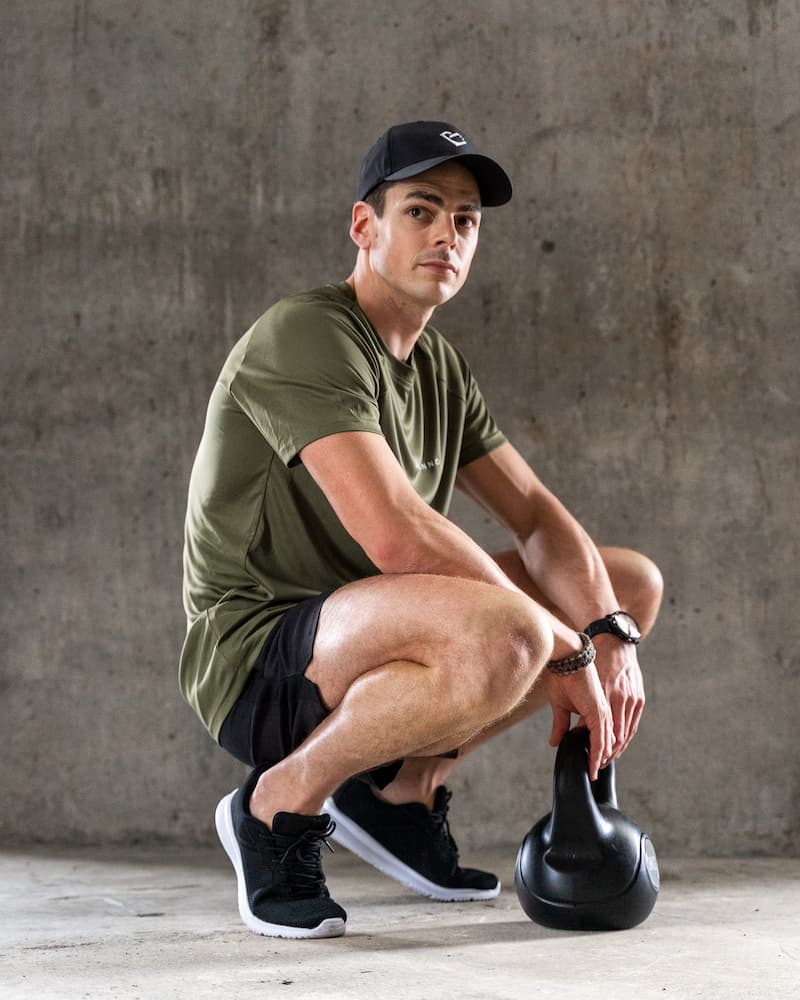
Behind every number is a person who turned up and put in the work. We measure what matters, from strength and confidence to participation and long-term adherence, and report it honestly.
That honesty is the point. We would rather show a smaller, defensible number than a big one we cannot back up, so individuals, employers and funding partners across Christchurch and Canterbury can trust exactly what our coaching delivers.
Our first detailed case studies are in preparation, with full participant consent. Each will cover the challenge, who the programme served, what Everest delivered, the measured outcome and a participant or partner voice. We would rather publish nothing than publish a story we cannot evidence.
Most claims about movement fall over because nobody wrote down the starting point. Five rules keep ours standing up.
Every programme opens with a recorded starting point, so change can be attributed rather than assumed. Without it, any improvement is a story, not a result.
Consistent instruments, applied the same way across cohorts and sites, so results can be compared rather than just collected.
Measures that showed no change are published alongside those that did. Selective reporting is the fastest way to make a real result worthless.
Source, date range, sample and calculation are recorded before anything is published, and we can produce them on request.
Our pilot data and methodology are available for independent review. Findings nobody else is allowed to check are not findings.
Participants, and the parents of any child taking part, agree to how their data may be used before it is collected, including any later use in research or reporting.
Physical activity is associated with reduced risk of cardiovascular disease, type 2 diabetes and several cancers, and with reduced symptoms of depression and anxiety. The World Health Organization sets this out across the lifespan in its physical activity and sedentary behaviour guidelines. That evidence is not what is missing.
Delivery. Structured, repeatable, measured movement in the places people already are (schools, workplaces, after-school care and community settings), run by people whose job it is to turn up every week and record what happened.
That is the gap Everest works in. We are building the delivery capability and the measurement discipline to sit alongside health and education systems, not to duplicate them.
Everest does not diagnose, does not treat, and does not claim that any programme we run prevents illness in an individual. We are a delivery and measurement organisation, and we work within our scope of practice.
What we can do is deliver movement consistently, measure it properly, and contribute evidence about what works, for whom, and at what cost per participant.
The EMPOWER pilot is a feasibility and implementation study. With 75 children over six weeks at a single partner and no control group, it is designed to test whether the programme can be delivered consistently, whether children engage with it, and whether the measures we have chosen hold up in the field. It is not designed to demonstrate disease prevention and we will not present it as though it were. Establishing that takes larger cohorts, longer follow-up and independent design, which is the path this pilot is the first step on.
Evidence position based on the World Health Organization guidelines on physical activity and sedentary behaviour. Everest programmes are delivered by qualified trainers and coaches and are not a substitute for medical care.
Credibility matters more than big numbers. We hold ourselves to a clear evidence hierarchy, strongest evidence first, and never publish unverified or inflated figures.
Participation, adherence, retention, strength and movement change, programme completion and validated survey results.
A defined starting point, intervention, duration and measured outcome.
Shared with full permission and appropriate context.
Feedback from partners and repeat engagements.
Programme descriptions and delivery methodology.
Community images, media coverage and milestone records.
Every public statistic is recorded in an evidence register noting its source, date range and calculation method before it appears on this site.
Whether you are an individual or an organisation, we are happy to talk through realistic outcomes.